

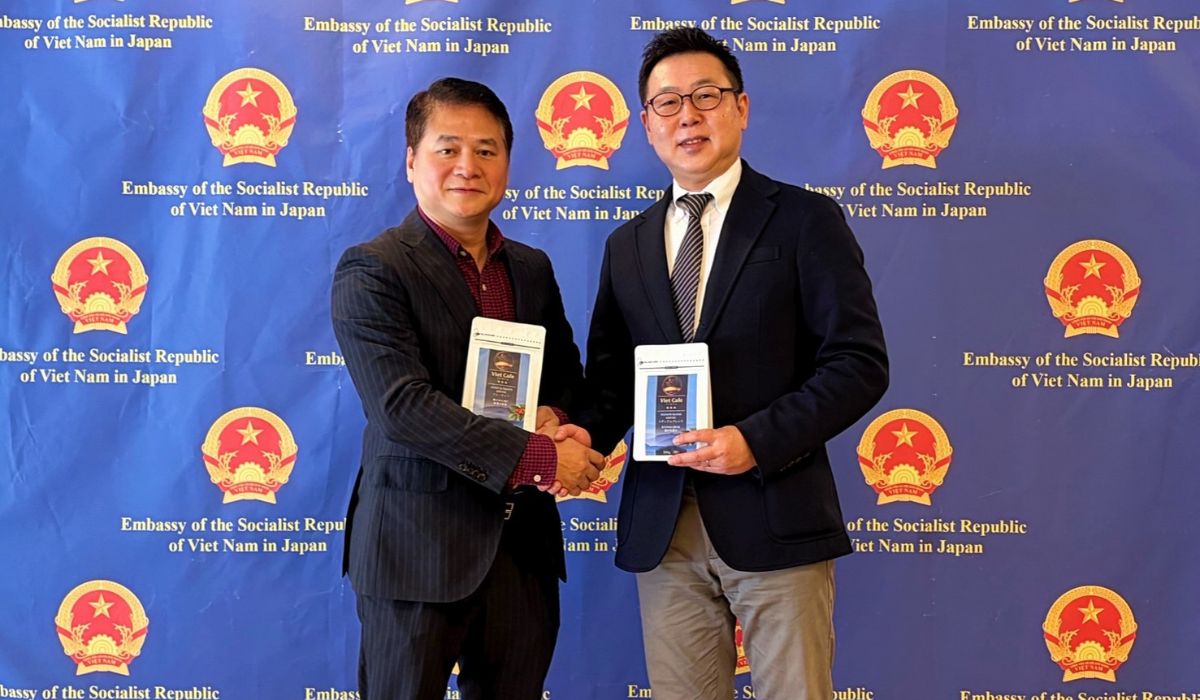
We will be providing our coffee at parties hosted by the Vietnamese Embassy, in response to their request. The person on the left in the photo is Mr. Ta Duc Minh, Commercial Counselor. The item in his hand is our retail product.
In February 2026, I had the opportunity to exchange views with Mr. Ta Duc Minh, Commercial Counselor at the Embassy of Vietnam in Japan, on the theme of “Improving the Positioning of High-Quality Vietnamese Coffee in the Japanese Market.” In a word, it was a time to discuss how to present Vietnamese coffee, which we can be proud of to the world, as a "proper brand" in Japan.
Vietnam, the World's Second Largest Coffee Producer – Its Surprising Presence in the Japanese Market
Vietnam is a coffee powerhouse, ranking as the world's second-largest coffee producer after Brazil, with an annual production of approximately 1.9 million tons.
Japan imports approximately 360,000 tons of green coffee beans, of which an estimated 100,000 tons are from Vietnam. By volume, it is said that about a quarter of the coffee consumed in Japan is from Vietnam.
Why is "Vietnamese coffee" not well-known?
Nonetheless, wouldn't it be true that many people say, "I haven't really heard of Vietnamese coffee" or "I don't see it in stores"?
In reality, it is widely used as a raw material for instant coffee and canned coffee. If you often check the "country of origin" labeling, you will frequently see "Vietnam" written there. In Vietnam, Robusta varieties account for over 90% of production and have mainly been treated as commodity (general-purpose raw material) for instant and blended use.
While they don't often appear in the spotlight, they are in a position that can be described as the “unsung hero” supporting the Japanese coffee market.
The background behind the established image of "commodity exporting countries."
On the other hand, looking at the world of specialty coffee and cafes, producing countries themselves are often spoken of as brands, such as Brazil, Colombia, Kenya, Ethiopia, and Indonesia.
For a long time, Vietnam's image as a "commodity coffee-producing country, primarily robusta" has been firmly established. This has led coffee industry professionals seeking brand value to shy away from it, and it has remained largely out of the sight of general consumers. This situation is similar within Vietnam itself, with consistently low trading prices over many years, which has had the effect of pressuring the livelihoods of producers.
Challenges faced by small family-run farms
Approximately 80-90% of coffee farmers in Vietnam are said to be small-scale, family-run farms, and investment in equipment and initiatives for quality improvement has presented a significant financial hurdle.
Also, the difficulty in organizing unions and similar bodies was one reason why they couldn't escape the image of being "raw material supplier countries."
The Emergence of "Fine Robusta" and New Movements in the Japanese Market
However, in recent years, the production of Arabica, the mainstream bean for regular coffee, has expanded in some regions, and "Fine Robusta," which possesses quality comparable to specialty Arabica, has emerged among Robusta beans.
Even within Japan, though still not numerous, roasters and cafes that primarily feature high-quality Vietnamese coffee are beginning to emerge.
"Branding" promoted in collaboration with the Vietnamese Embassy
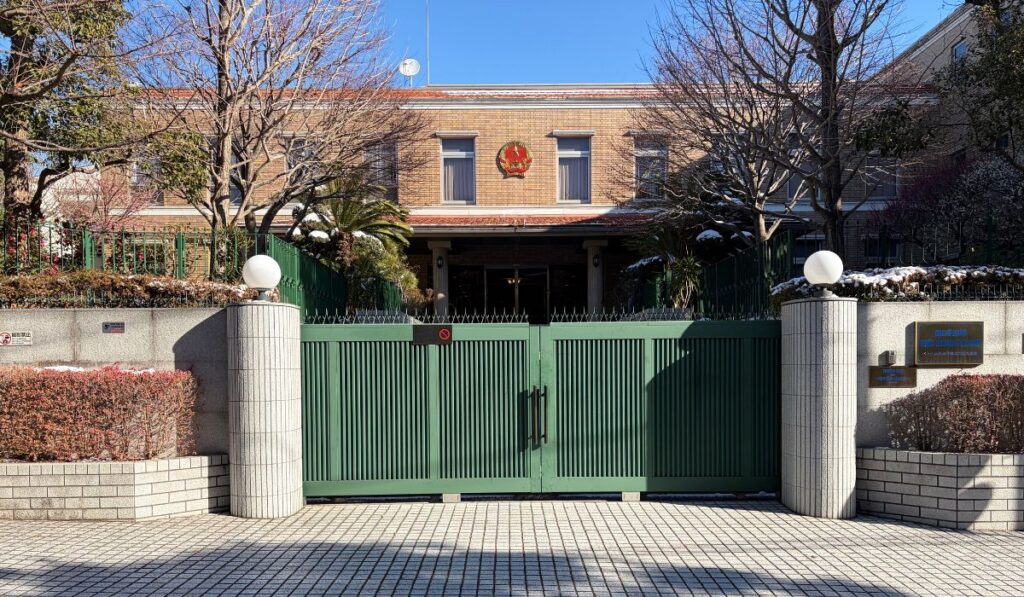
In this exchange of opinions, we organized the challenges within Vietnam and the challenges faced by the Japanese market. We confirmed that the Vietnamese Embassy and our company will collaborate to solve these issues one by one towards "branding Vietnamese coffee."
Regarding future information dissemination
Going forward, we plan to continuously share information, including initiatives at our production sites and case studies of our market development in Japan.
Starting on February 9th, we will deliver our journey of collaboration with the Vietnamese Embassy and the new potential of high-quality Vietnamese coffee through our news and blog.