


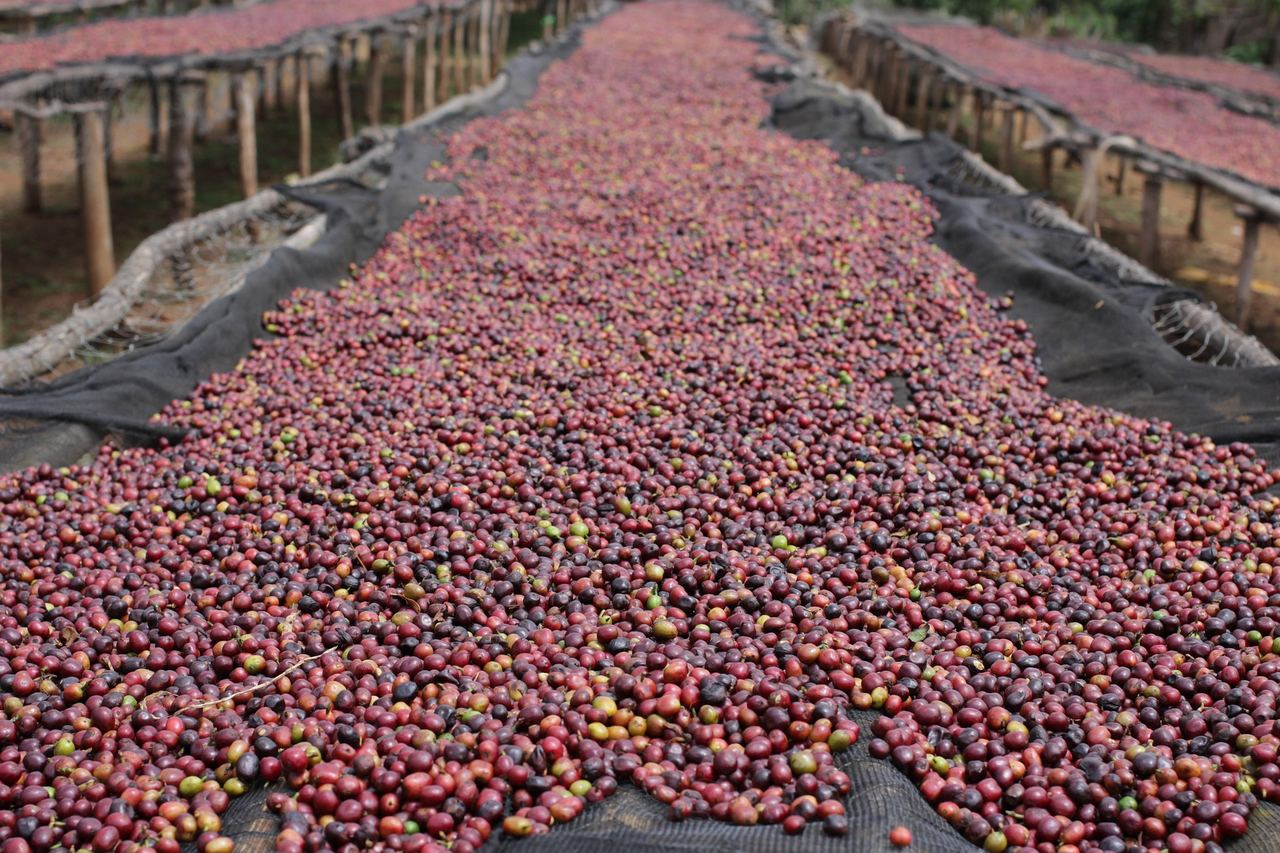
Vietnam, the world's second-largest coffee producer, has long been known for its image as a "robusta-centric mass producer." It is also true that much of the coffee produced, exceeding 1.8 million tons annually, has been exported worldwide as raw material for instant coffee and blends.
Meanwhile, in recent years, specialty Arabica and high-quality Robusta known as "Fine Robusta" have emerged, primarily in the Central Highlands, and Vietnamese coffee is stepping onto a new stage from "quantity to quality." This page introduces the changes taking place in the Central Highlands, including Dalat, Lam Dong, Bao Loc, and Di Linh, incorporating our firsthand experiences on the ground.
The Central Highlands are the "heartland" of Vietnamese coffee.
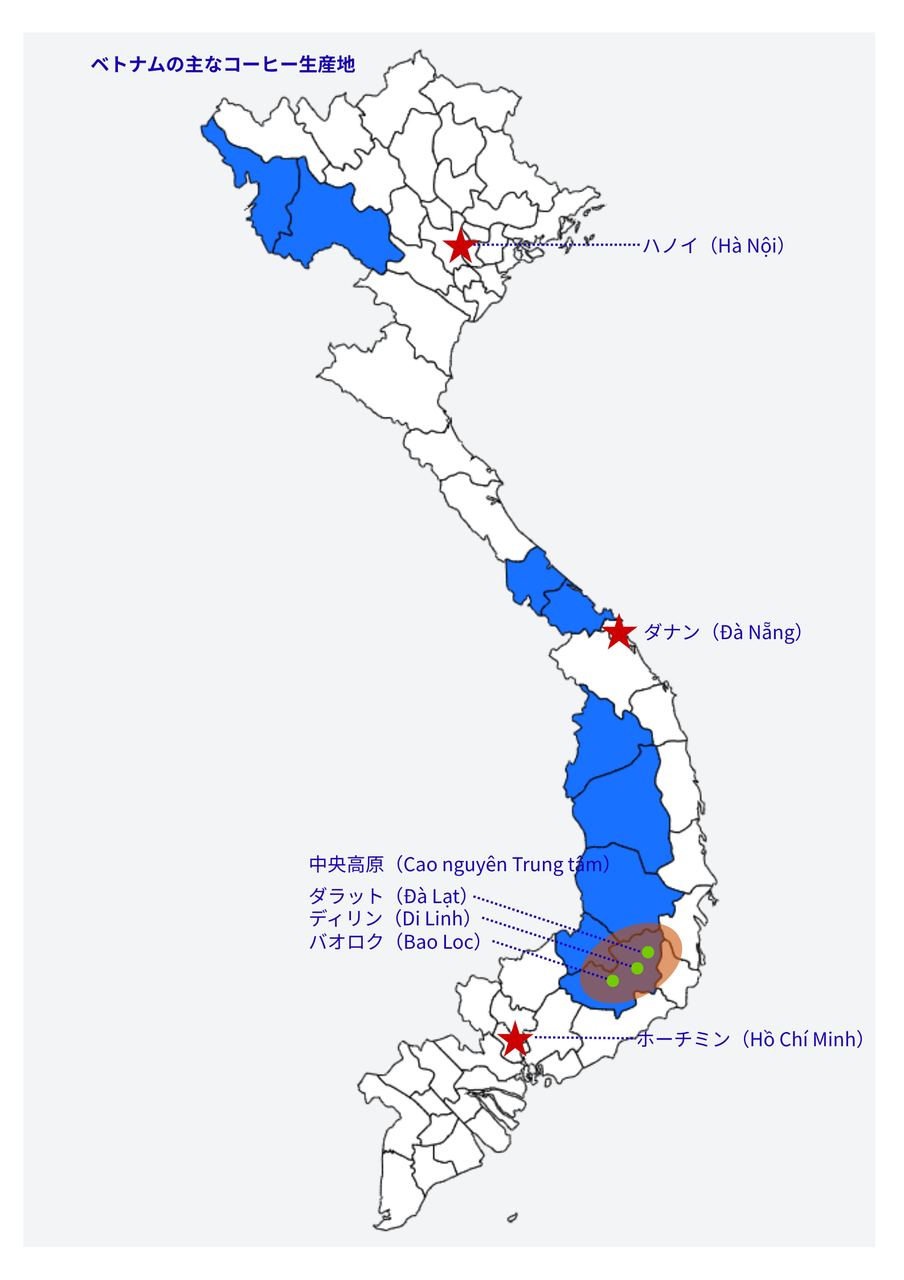
Around 80% of Vietnam's coffee production is concentrated in the Central Highlands (Tay Nguyen region). Among these, the three provinces of Dak Lak, Lam Dong, and Dak Nong alone account for nearly 80% of the domestic production volume. Lam Dong province is a major producing region, responsible for approximately 25.8% of Robusta and about 41.8% of Arabica.
The Dalat region, at an altitude of around 1500m, has a cool climate suitable for Arabica, so much so that it is called the "Karuizawa of Vietnam" and the "City of Flowers." High-quality Arabica coffee is grown here, alongside fruits and flowers. On the other hand, the Bao Loc and Di Linh areas of Lam Dong province have a good balance of altitude, temperature, and soil, and are regions where diverse cultivation combining Robusta and Arabica is carried out.
The area we are visiting is precisely this central highlands producing region. In Dalat, we focus on Arabica, and in Bao Loc and Di Linh, Lam Dong Province, we continuously visit farms for both Robusta and Arabica. The coffee beans we deliver in Japan are also grown on these farms.
The new category, Fine Robusta
When you hear "Robusta," many people might have the image of "bitter and heavy" or "cheap beans for instant coffee." However, in recent years, high-quality Robusta that scores 80 points or more according to the standards set by the international organization CQI (Coffee Quality Institute) is gaining global attention as "Fine Robusta."
In Vietnam, too, with the strength of producing about 40% of the world's Robusta beans, an increasing number of farms are challenging themselves to produce Robusta that is evaluated not only for its quantity but also for its quality. In parts of the Central Highlands, meticulous efforts are being made at the same level as specialty Arabica, such as natural processing with innovative fermentation processes and harvest management that emphasizes sugar content.
In Lam Dong and Dak Lak provinces, contests like the "Vietnam Amazing Cup" are held to evaluate specialty Robusta that meets international standards. In recent competitions, farms in Lam Dong province have won the top prize in the Robusta category, increasing their prominence.
Specialty Arabica is steadily growing.
Vietnam is known for its robusta coffee, but specialty arabica is steadily increasing.
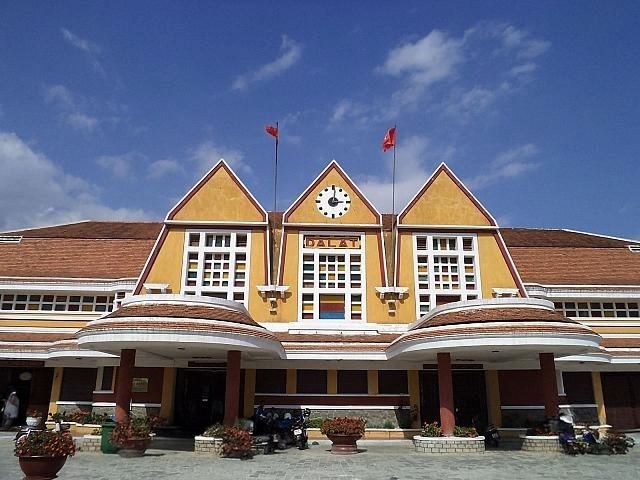
Especially around Da Lat, clean Arabica processed using the washed method is produced at high altitudes of 1500-1600m, and is beginning to be handled by roasters in Japan, Europe, and the US as a "new option that represents Vietnam."
As for the flavor profile, we're seeing an increase in lots that have a "highland Southeast Asian character, distinct from Brazil or Central America," with floral aromas, soft acidity, and hints of nuts and chocolate. Within Vietnam, cafes offering specialty Arabica like this are also growing, gaining support primarily from younger coffee enthusiasts.
Traceability and Sustainability Movements
Alongside quality improvement, "traceability" and "sustainability" are becoming increasingly important for specialty/fine robusta from the Central Highlands. With the demand for traceability down to the farm level and production systems that consider forest conservation, water resources, and working environments, particularly from Europe, projects in Vietnam in collaboration with export companies and overseas roasters are on the rise.
Specifically, initiatives such as the following are underway on some farms in Lam Dong and Dak Lak provinces.
- Lot management by producer and assignment of farm codes
- Pesticide and fertilizer usage history, harvest date, and processing method records
- Investment in facilities to protect water and soil, such as the introduction of shade trees and the development of reservoirs and sprinklers.
- Child support for school enrollment and improvements to toilets and living environments
Support projects by Japanese companies are also increasing, with some examples focusing on technical guidance and infrastructure development for farmers engaged in sustainable cultivation. The shift is slowly but surely moving away from simply "buying high-quality beans" towards "co-creating production models that protect the environment and livelihoods."
Lam Dong Bao Loc Dien Binh and Our Initiatives
These changes are not just about statistics or the news; they become more real when you stand on the ground in the Central Highlands.
On farms in Bảo Lộc and Di Linh, Lâm Đồng Province, while there are many small-scale family farms, efforts toward producing specialty/fine robusta are gradually taking hold, such as thorough harvesting timing, improved sorting processes, and better drying facilities.
We continue to visit Arabica farms, primarily in Dalat, and both Robusta and Arabica farms in Bao Loc and Di Linh in Lam Dong province. The coffee beans we deliver to Japan are also grown on these farms. Behind this, dialogue at the harvest and processing sites, and building trust based on long-term purchasing are indispensable.
The Future of Vietnamese Coffee
Vietnamese coffee is transitioning from being a large-volume supplier primarily of Robusta beans to a country that expresses its individuality through specialty and fine Robusta coffees over a long period. The initiatives underway in Dalat, Lam Dong, Bao Loc, and Di Linh in the Central Highlands are at the forefront of this transformation.
On the COFFEE page, we will continue to gradually introduce local movements, stories from the farms, and how to enjoy them in Japan. We hope that you too will be able to feel the landscapes and the efforts of the people behind a cup of Vietnamese coffee.